Understanding Economic Sanctions and Export Control: Implications for Global Trade
In the increasingly interconnected global economy, nations often impose economic sanctions and export control lawyers to influence the behavior of other countries, restrict trade, and protect national security interests. This article explores the complexities of economic sanctions and export controls, their implications for international trade, and the evolving landscape of global regulations.
What are Economic Sanctions?
Economic sanctions are policy tools implemented by countries or international organizations to restrict trade and financial transactions with specific nations, organizations, or individuals. The primary objectives of sanctions include the deterrence of undesirable behavior, the enforcement of international law, and the protection of national security. Common forms of economic sanctions include trade embargoes, asset freezes, and restrictions on financial transactions.
The Rationale Behind Economic Sanctions
The reasons for imposing economic sanctions can vary widely, but they often stem from concerns related to human rights violations, aggressive military actions, terrorism, or nuclear proliferation. For instance, sanctions against North Korea have been largely motivated by the country’s development of nuclear weapons and its belligerent military posture, while sanctions against Iran have been focused on its nuclear program and support for terrorist organizations.
Types of Economic Sanctions
Economic sanctions can be categorized into several types, each with distinct characteristics:
- Comprehensive Sanctions: These are broad restrictions that prohibit all or most trade and financial activities with a designated country. An example is the U.S. embargo against Cuba.
- Targeted Sanctions: Also known as “smart sanctions,” these focus on specific individuals, entities, or sectors within a country rather than the economy as a whole. This approach is intended to minimize humanitarian impact.
- Military Sanctions: Restrictions on military sales and transfers of military technology are common in various sanctions regimes, aimed at limiting military capabilities.
- Financial Sanctions: These sanctions target specific financial transactions or entities, often involving asset freezes or restrictions on access to international financial systems.
The Role of Export Controls
Export controls are regulatory measures that governments implement to regulate the export of sensitive goods, technologies, and services. While export controls can overlap with economic sanctions, they are distinct mechanisms aimed primarily at protecting national security and preventing the proliferation of weapons of mass destruction. Export control laws govern a wide range of items, from military equipment to dual-use technologies that can have both civilian and military applications.
Key Players in Sanctions and Export Control
Several key players are involved in the enforcement and compliance of economic sanctions and export controls:
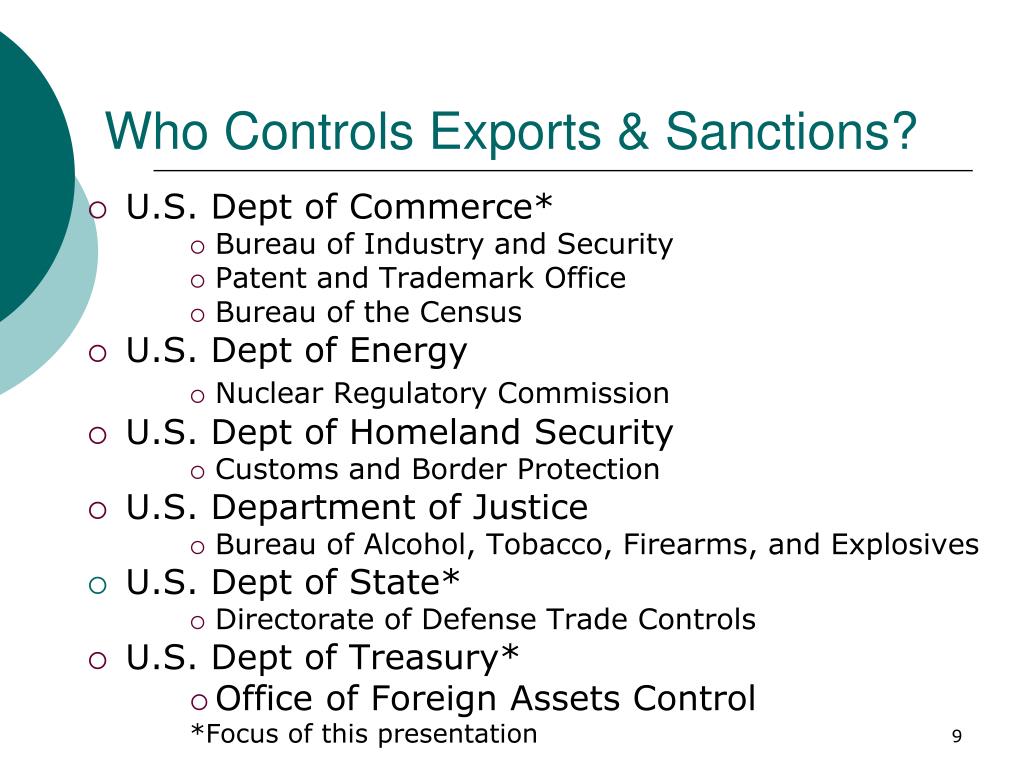
- Government Agencies: Various government bodies, such as the U.S. Treasury Department’s Office of Foreign Assets Control (OFAC) or the European Union, are responsible for implementing and enforcing sanctions and export controls.
- International Organizations: Entities like the United Nations and regional organizations may impose sanctions to maintain international peace and security.
- Legal Experts: As sanctions regimes become more complex, the role of legal experts in advising businesses on compliance with sanctions and export regulations is crucial.
Challenges in Compliance
Navigating the often convoluted landscape of economic sanctions and export controls presents significant challenges for businesses engaged in international trade. Key challenges include:
- Complex Regulations: The multitude of sanctions regimes and regulations can be overwhelming, requiring businesses to stay informed about changes and developments.
- Risk of Secondary Sanctions: Companies doing business with one sanctioned entity may inadvertently face sanctions themselves, known as secondary sanctions, which can complicate global supply chains.
- Jurisdictional Issues: Laws concerning economic sanctions may differ from one jurisdiction to another, leading to confusion, especially for multinational corporations.
Implications for Global Trade
The impact of economic sanctions and export controls on global trade cannot be understated. They can lead to altered trade patterns, strained international relationships, and economic hardships within sanctioned countries. However, the long-term effectiveness of sanctions as a foreign policy tool is debated among scholars and policymakers. While some argue that sanctions can indeed compel behavioral changes, others contend that they may exacerbate tensions and hardship without achieving desired outcomes.
The Future of Sanctions and Export Controls
As geopolitical dynamics continue to evolve, the approach to economic sanctions and export controls is likely to shift in response. Increased globalization and technological advancements will require continuous adaptation of regulations. Moreover, the role of multilateral efforts, such as sanctions imposed by the United Nations, may become increasingly significant in addressing complex global issues, such as terrorism, human rights, and environmental protection.
Conclusion
Economic sanctions and export controls are critical tools in the arsenal of nations seeking to influence the global order. While they can achieve specific policy objectives, their complexity necessitates careful navigation by businesses, particularly in the face of ever-evolving regulations and geopolitical tensions. Legal experts specializing in economic sanctions and export controls play an indispensable role in guiding organizations through this intricate landscape, ultimately contributing to a more secure and compliant global trade environment.